

Baot
Baot categories
About Baot
BAOT is a Chinese dental materials company known for zirconia blocks, dental ceramics, and stain and glaze for laboratories. Its range also includes CAD/CAM milling machines and dental furnaces for digital workflows. Explore BAOT products at DentiKart, a trusted dental supplier in Pakistan, and find reliable materials for crowns, bridges and milling centers.
Frequently asked questions
What is BAOT dental porcelain powder and what is it used for?
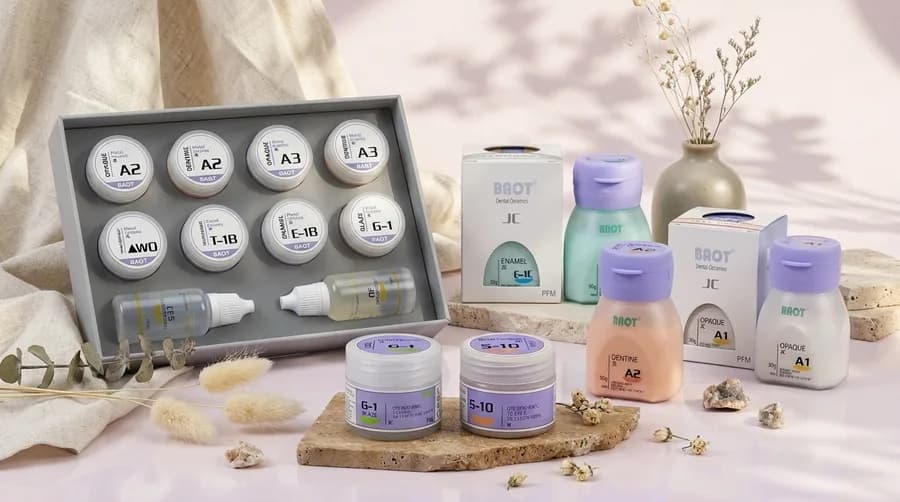
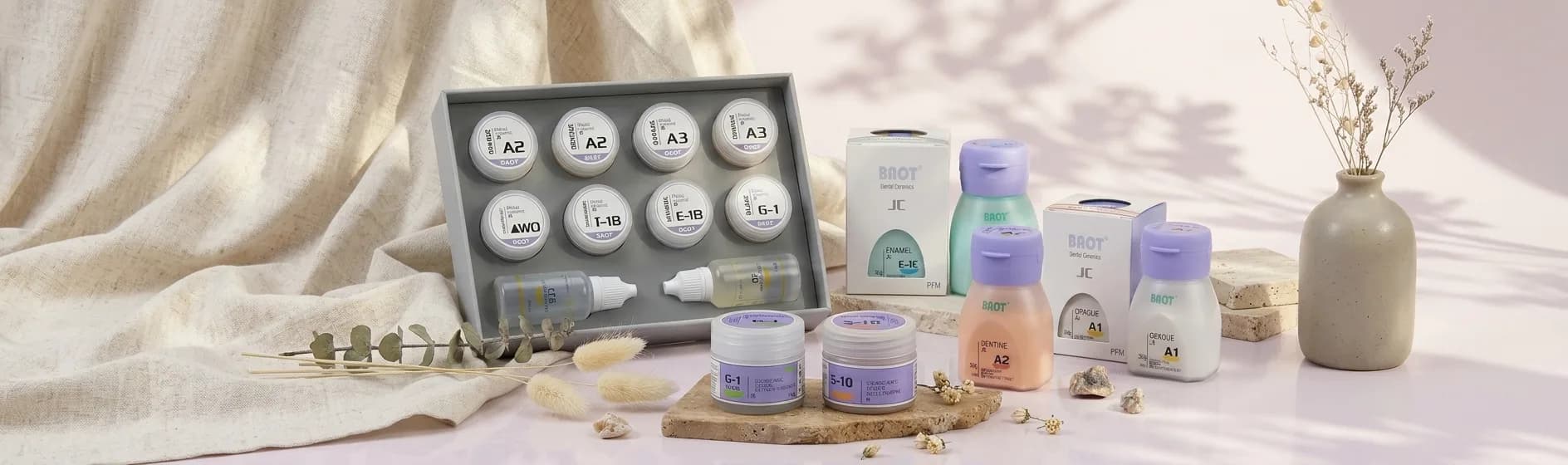
BAOT is a Guangdong, China brand of dental ceramic powders for PFM (porcelain fused to metal) restorations. The range covers the full layering sequence: opaque, opaque dentine, dentine, enamel, transparent, stain and glaze. Dental labs in Pakistan use BAOT porcelain powder to build natural-looking crowns and bridges over metal frameworks.
Which shades and products does BAOT offer?
BAOT is compatible with the VITA Classic shade system. The range covers A1–D4 and B1M1–B5M3, plus four bleach shades (B1M1 BL1–BL4). Stain shades come in the S-1A to S-1D families, and transparent powder comes in four levels, from low to ultra-high. Pack sizes include 3g, 5g, 15g and 50g, and a basic metal porcelain kit is available too. Check each product page for the exact sizes in stock.
Does BAOT porcelain meet ISO standards, and how is it fired?
The supplier data lists values well within the ISO 6872 limits. Flexural strength is about 137.2 MPa against a minimum of 50 MPa. Bonding strength is about 52.3 MPa against a minimum of 25 MPa. Chemical solubility is about 33.3 μg/cm² against a maximum of 100 μg/cm². Each layer has a set firing temperature, from 960°C for bond down to 890°C for glaze and stain. This gives technicians repeatable results from case to case.